
Maraging or Non-maraging?
Updated: Jan 26
Every fencer remembers the moment they first start paying attention to their blade. At the beginning, all blades look and feel more or less the same. But as training becomes more intense and competition more serious, one question inevitably comes up: maraging or non-maraging?
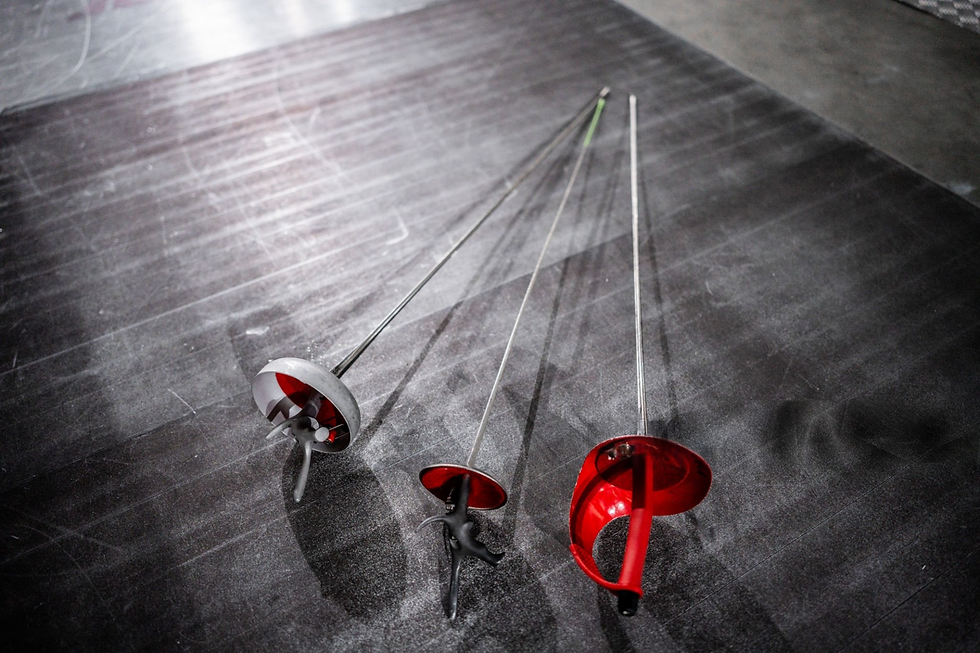
The difference between these two types of fencing blades goes far beyond price. It affects performance, safety, and how long your equipment will last on the piste. Non-maraging blades are the traditional option most fencers start with. Made from standard steel alloys, they have been used for decades in clubs and training halls all over the world. They offer good flexibility, a familiar feel, and a very accessible price point. For beginners, schools, and fencing clubs, they are often the natural choice. They do the job well during daily training and allow fencers to focus on learning technique without worrying about costly equipment.
However, over time, every blade accumulates stress. Each lunge, parry, and attack slightly bends the steel. In non-maraging blades, this repeated flexing slowly weakens the metal. The problem is that this fatigue is often invisible. One day the blade feels normal, and the next it breaks suddenly. This unpredictable failure is the main limitation of traditional steel blades, especially as fencing speed and power increase.
Maraging blades were developed to solve exactly this problem. Originally designed for high-performance industries such as aerospace, maraging steel behaves very differently under stress. Instead of weakening quickly, it resists metal fatigue far more effectively. On the piste, this translates into a blade that keeps its characteristics for much longer and, most importantly, gives warning signs before failing.
A maraging blade will usually bend permanently or show visible deformation long before it breaks. This gives the fencer time to replace it, reducing the risk of sudden fractures during a bout. For this reason, maraging blades are considered significantly safer, which is why they are required in FIE competitions and at most high-level national events.
The feeling when fencing with a maraging blade is often described as more stable and reliable, especially in high-intensity situations. While the initial cost is higher, many competitive fencers quickly realize that these blades last longer and perform consistently over time. What seems like a higher investment at first often becomes a cost-effective choice in the long run.
So which blade is the right one? For a beginner discovering fencing or a club equipping dozens of weapons, non-maraging blades remain a smart and practical option. For athletes who compete regularly, travel to tournaments, or simply want the highest level of safety and durability, maraging blades become the natural next step.
Understanding this difference helps every fencer make a better choice—not just for performance, but for confidence on the piste. Because when you trust your blade, you can focus entirely on what really matters: the bout in front of you.


Comments